The usual gambit for introducing a year-end list is to remark on the abundance of good titles, acknowledge the difficulty in choosing just ten (or five, or three), and comment on the overall state of the industry. And while I certainly debated what to include on my list, I’ll be honest: 2011 yielded fewer contenders for Best Manga than any other year I’ve covered. The dearth of new titles was attributable to publishers’ financial prudence; companies released fewer books, licensed fewer series, and focused on repackaging older content for budget-conscious consumers. And though I selfishly wish that more new material had been released this year, I think manga publishers have done an excellent job of responding to their biggest challenges: a sluggish economy, digital piracy, and Borders’ bankruptcy.
So what titles made my 2011 list? My top ten are below, along with my list of favorite continuing series, favorite finales, and favorite guilty pleasures.
 10. Breathe Deeply
By Yamaaki Doton • One Peace Books
Part sci-fi thriller, part coming-of-age story, this engrossing drama examines the relationship between two young men: Sei, who grew up in a world of privilege, and Oishi, a boy from the wrong side of the tracks. Both Sei and Oishi fall in love with Yuko, a sickly girl whose incurable illness inspires her suitors to become medical researchers. In less capable hands, Breathe Deeply might have been a mawkish paean to the purity of young love, but the husband-and-wife team of Yamaaki Doton have a keen ear for dialogue; the interactions between Yuko and her two suitors are tinged with an authentic mixture of adolescent anxiety, sexual longing, and braggadocio. Clean, expressive artwork and well-rounded characters help sell the story, especially in its final pages. One of 2011’s best surprises.
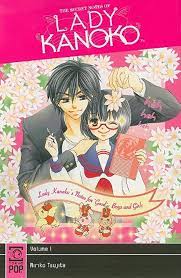 9. The Secret Notes of Lady Kanako
By Ririko Tsujita • Tokyopop
Kanoko, the sardonic heroine of The Secret Notes of Lady Kanoko, is a student of human behavior, gleefully filling her notebooks with detailed observations about her classmates. Though Kanoko would like nothing more than to remain on the sidelines, she frequently becomes embroiled in her peers’ problems; they value her independent perspective, as Kanoko isn’t the least bit interested in dating, running for student council, or currying favor with the alpha clique. Kanoko’s sharp tongue and cool demeanor might make her the mean-girl villain in another shojo manga, but Ririko Tsujita embraces her heroine’s prickly, opinionated nature and makes it fundamental to Kanoko’s appeal. It’s a pity TOKYOPOP didn’t survive long enough to finish this three-volume series, as it’s one of the best shojo titles in recent memory.
 8. Wandering Son
By Takako Shimura • Fantagraphics
In her thoughtful review of volume one, Michelle Smith praised Takako Shimura’s deft use of perspective: “The main thing I kept thinking about while reading Wandering Son… is how things that seem insignificant to one person can be secretly, intensely significant to someone else.” Shimura’s ability to dramatize each character’s unique point of view is one of the reasons Wandering Son never feels preachy, even though the topic suggests an Afterschool Special; we are always exquisitely aware of the subtle but important changes in the way each character views herself, as well as her fears and hopes.
 7. Princess Knight
By Osamu Tezuka • Vertical, Inc.
What Osamu Tezuka’s New Treasure Island (1946) was to shonen, his Princess Knight (1953-56) was to shojo: both were long-form adventure stories with cinematic flair. Neither could be said to be the “first” shonen or shojo manga, but both had a profound influence on the artists who came of age in the 1940s and 1950s, offering a new storytelling model for them to emulate. Viewed through a contemporary lens, Princess Knight hasn’t aged quite as well as New Treasure Island, as it’s saddled with some woefully antiquated notions of gender. At the same time, however, it’s easy to see why this story appealed to several generations of Japanese girls: Sapphire gets to eat her cake and have it too, having swashbuckling adventures *and* winning the hand of Prince Charming. —Reviewed at Manga Bookshelf on 11/21/11 and The Manga Critic on 12/19/10
 6. Tank Tankuro: Gajo Sakamoto, Manga’s Pre-War Master, 1934-35
By Gajo Sakamoto • Press Pop
Almost twenty years before Osamu Tezuka’s Astro Boy took flight in the pages of Shonen Kobunsha magazine, Gajo Sakamoto’s Tank Tankuro enchanted Japanese youngsters with his monster-fighting exploits and cool gadgets. Though the series’ propaganda intent is impossible for contemporary readers to ignore — Tank fights the Chinese, who are portrayed in less-than-flattering terms — Presspop’s new anthology demonstrates that Sakamoto’s artistry has aged more gracefully than his storylines. Sakamoto’s work is packaged in a handsome, hardcover edition that includes thoughtful extras: a contextual essay by translator Sunsuke Nakazawa, an interview with Sakamoto’s son, and an article by Sakamoto himself, discussing the character’s origin.
 5. Stargazing Dog
By Takashi Murakami • NBM/Comics Lit
Consider yourself warned: Stargazing Dog is a five-hanky affair. The two interconnecting vignettes that comprise this slim volume explore the bond between Happie, a shiba inu, and Daddy, his owner. When Daddy loses his job, his home, and his family, he and Happie hit the road in search of a new life. Though the outcome of Happie and Daddy’s journey is never in doubt — we learn their fate in the opening pages of the book — Murakami draws the reader into their story with an honest and unsparing look at the human-dog compact that may remind cinephiles of Vittorio de Sica’s Umberto D. —Reviewed at The Manga Critic on 12/23/11
 4. Onwards Towards Our Noble Deaths
By Shigeru Mizuki • Drawn & Quarterly
In this blistering indictment of Japanese militarism, Shigeru Mizuki draws on his own experiences during World War II to tell the story of a platoon stationed in Papua New Guinea. The soldiers face a terrible choice: fight a hopeless battle, or face execution for treason. Like many war stories, Onwards Toward Our Noble Deaths documents the tremendous human sacrifice of modern armed conflict: gruesome injuries, senseless deaths, devastated landscapes. What lends Mizuki’s narrative its special potency is his depiction of the senior officers; their perverse dedication to their mission turns them into tyrants, more concerned with saving face than saving their own soldiers’ skins. Essential reading for anyone interested in World War II.
 3. The Drops of God
By Tadashi Agi and Shu Okimoto • Vertical, Inc
As Oishinbo handily demonstrated, a skilled writer can fold a considerable amount of educational detail into a story without reducing it to a textbook. The Drops of God follows a similar template, imparting highly specialized information about wine with the same natural ease that Law & Order illustrates the inner workings of a crime investigation. At the same time, however, Drops is a delicious soap opera, filled with domineering fathers, mustache-twirling villains, evil beauties, eccentric oenophiles, and down-on-their-luck restauranteurs. Even if the reader isn’t the least bit interested in wine, he’ll find the drama as irresistible as an episode of Dynasty. —Reviewed at The Manga Critic on 12/16/11
 2. A Zoo in Winter
By Jiro Taniguchi • Fanfare/Ponent Mon
Drawing on his own experiences, Jiro Taniguchi spins an engaging tale about a young man who abandons a promising career in textile design for the opportunity to become a manga artist. Though the basic plot invites comparison with Bakuman, Taniguchi does more than just document important milestones in Hamaguchi’s career: he shows us how Hamaguchi’s emotional maturation informs every aspect of his artistry — something that’s missing from many other portrait-of-an-artist-as-a-young-man sagas, which place much greater emphasis on the pleasure of professional recognition than on the satisfaction of mastering one’s craft. Lovely, moody artwork and an appealing cast of supporting characters complete this very satisfying package. —Reviewed at The Manga Critic on 5/28/11
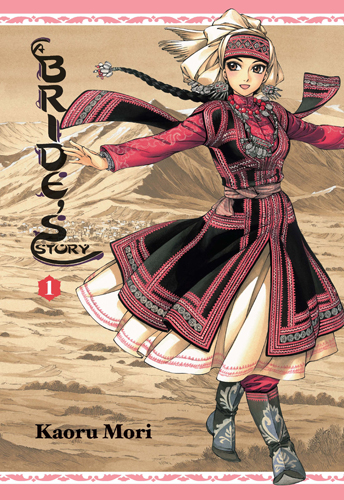
 1. A Bride’s Story
By Kaoru Mori • Yen Press
A Bride’s Story, which takes place on the banks of the Caspian Sea, explores the relationship between Amir Halgal, a nineteen-year-old nomad, and Karluk Eihon, the eldest son of sheep herders. Though their marriage is one of political expedience, Amir is determined to be a good wife, doing her utmost to learn her new family’s customs, befriend the members of their extended clan, and earn her new husband’s respect. Kaoru Mori is as interested in observing Amir’s everyday life as she is in documenting the growing conflict between the Halgal and Eihon clans, yet A Bride’s Story is never dull, thanks to Mori’s smart, engaging dialogue; as she demonstrated in Emma and Shirley, Mori can make even the simplest moments revealing, whether her characters are preparing a manor house for the master’s return or skinning a freshly killed deer. By allowing her story to unfold in such a naturalistic fashion, A Bride’s Story manages to be both intimate and expansive, offering readers a window into life along the Silk Road. —Reviewed at The Manga Critic on 5/24/11
HONORABLE MENTIONS
As in previous years, I had difficulty limiting myself to just ten titles, so I compiled a list of manga that didn’t quite make my best-of list, but were thoroughly enjoyable:
- Other Awesome Debuts: The Book of Human Insects (Vertical, Inc.), Tesoro (VIZ)
- Best Continuing Series: 20th Century Boys (VIZ), Bunny Drop (Yen Press), Chi’s Sweet Home (Vertical, Inc.), Cross Game (VIZ), Ooku: The Inner Chambers (VIZ), Twin Spica (Vertical, Inc.)
- Best New Guilty Pleasure: Blue Exorcist (VIZ), Oresama Teacher (VIZ)
- Best Reprint Edition: Magic Knight Rayearth (Dark Horse), Pretty Guardian Sailor Moon (Kodansha Comics)
- Best Manga I Thought I’d Hate: Cage of Eden (Kodansha Comics)
- Best Finale: Black Jack, Vol. 17 (Vertical, Inc.)
So now I turn the floor over to you, readers: what were your favorite new manga of 2011?
Aaron says:
I nominated Gunslinger Girl, K-On!, and Kingyo Used Books (although that’s kind of cheating since it, been ou since 2010). Nice to see Tank Tankuro get a nod and.
Katherine Dacey says:
Hi, Aaron! I still haven’t read K-On!, though I plan to someday. (If it’s available through the Yen Press app, that day may be sooner rather than later.) I admit that Gunslinger Girl made me uncomfortable for some of the same reasons as Blood Alone; I find the relationships between the child assassins and their handlers kind of squirm-inducing. But it’s certainly one of the best-looking titles in the Seven Seas catalog; I initially picked it up on the strength of the cover art alone (back when it was an ADV property).
Aaron says:
I don’t blame you for being uncomfortable about Gunslinger Girl the cover to the fourth omnibus is pretty squeam inducing (a little too suggestive if you know what I mean). I’m still convinced K-On! if marketed right could be this generation’s Azumanga Daioh.
Also since you mentioned Blood Alone it basically drops all pre tense in volume five and all but states outright that Misaki and Kuroe’s relationship is romantic so those first four volumes feel kind of disingenuous because I believed it wasn’t going to go where it is now but I guess I’m still painfully naive.
Aaron says:
@Kate Not to needlessly plug my own stuff (and sorry for the super late post) But I did a whole write up on why I considered Gunslinger Girl the best of 2011 so here’s a link http://mangapower22.blogspot.com/2012/01/gunslinger-girl-one-of-my-best-of-2011.html
Serdar says:
I’m a little sad “No Longer Human” didn’t make the list, but “A Bride’s Story” is easily as good for entirely different reasons.
Katherine Dacey says:
Hi, Serdar! I debated whether to include No Longer Human; it’s an obvious work of skill, and more ambitious than some of the books that made my final list. After reading the first two volumes, however, I felt that Furuya’s conception of the hero was different than Dazai’s. When I read the manga, Yozo struck me as a type, the disaffected young man who has trouble forming attachments; when I read the novel, however, Yozo struck me as a unique individual. I can’t put my finger on why Furuya’s adaptation left me feeling that way, but it ultimately prevented me from embracing the adaptation as fully as I might have. I’ll be curious to see if my impression holds after reading volume three.
BTW, I’m looking forward to reading your myriad Best of 2011 anime lists. I’m not a big anime viewer, but I’ve always found your movie reviews enormously helpful and entertaining. I have no doubt my Neflix queue will have a few new additions when I’m done reading your lists!
Serdar says:
My 2011 anime lists are at Anime.About.com right now — go check ‘em out!
As far as “NLH” goes, I was debating such questions endlessly, and then decided to fall back on an old rule: If you find yourself in the middle of such a debate about something, and not just to pick it apart, then there’s a chance it’s because you like it. I decided I couldn’t not think of it as one of the best releases of the year.
Also, I admit I’m hella behind on my manga reading, if only because a lot of my spare time is taken up by About.com itself. I’m unable to read most of what I want to because of this, so that’s why I didn’t create a formal “best-of” list for the year, because I knew it would be horribly lopsided. I’m mostly reading the stuff I am most motivated to make time for, which inherently biases my discoveries and appreciation.
Katherine Dacey says:
I’d still be curious to see what else made your best (or perhaps “worth my time”) list; it’s always fun to see what other people read and enjoyed. There’s so little intelligent discussion among reviewers that end-of-the-year lists can be a great catalyst for spirited conversation. And thanks for the link to About Anime — I finally have some time off, so I hope to catch up on my reading, on- and offline.
CJ says:
Bride’s Story and Wandering Son are the best new series for me, mostly because I’ve yet to pick up Princess Knight (but clearly my Tezuka shelves bursting with awesome won’t be complete without it, I just tend to get a lot of Vertical manga at Otakon where I can get it straight from them and haul it all back at once). I’ll just call Princess Knight the best manga I’ve yet to read but will be on my shelf in due time.
For continuing series, Twin Spica is an obvious choice (even if I’ve only read up through vol 8). I have Ooku 6 on my shelf, but have yet to read it because I tend to forget what happened last time due to the ye olde fakespeare dialogue, so I’d have to start over and those books take me like an hour and a half each to read, way more than most normal manga do (once again due to fakespeare). I’ll also give nods to Maoh and Arisa, two series I just enjoy too damn much!
A lot of good series ended this year, but I’ll give my vote to Hikaru no Go, which I was sad to see come to an end, even if it took Viz 7 years to publish the series when it ran for far less than 7 years (closer to 5) in Japan and wasn’t even ongoing when Viz put out the first volume. I don’t see why it took them so long really. Still, this was something I was glad that got published entirely, especially after Gintama got axed at vol 23ish, it gave me cause for concern. I wonder if it’ll be hard to find in the future, Viz didn’t exactly give the best treatment to Firefighter Daigo either…I hear they only published the whole of Daigo due to some forced deal that made them (great series with the worst sales numbers possible it seems) I’ve yet to read the last two vols of Black Jack, so I’ll just assume they’re as awesome as all the other volumes. I’d also give volume 17 my “best cover art” of the year, brilliant way to end the cover theme when I was kinda “meh” on it before.
As for best older series that I only discovered this year, Fruits Basket. Yes, it was the MMF that got me to get it (once I saw most of the volumes except for the easy to find ones at the used store for $3 each and pounced). It was a blind buy that could have gone very very badly, luckily it did not! It went fantastically! I also got all of Sanctuary, even hard to find vol 7 this year. Another great read!
Most exciting news for me is either DMP’s kickstarter for Swallowing the Earth getting double its needed funds, or for license announcements, either Vertical getting Adolf or Fantagraphics getting Heart of Thomas. Either way, they will both be getting my money in due time.
Saddest news is clearly Tokyopop, sadder still that Stu Levy seems to have gotten a mere slap on the wrist and went back to trolling everyone going “I’d like TP to publish manga again someday” mere months after TP’s closure. And none of the series I was collecting at the time have been rescued! I could see Future Diary getting a rescue in the future (especially seeing how the anime is now airing) and Hetalia, but I somehow don’t see one coming for Demon Sacred.
Katherine Dacey says:
I think I have a career for you, CJ: manga buyer! I should hire you to track down the two volumes of What’s Michael that I’m missing!
I’ll be very curious to hear what you think of Princess Knight when you do get around to reading it. Some of my favorite manga critics were a little disappointed in the book because of its gender politics; it’s clearly a product of a particular place and time, and some of Tezuka’s ideas about femininity haven’t aged very gracefully. Still, it’s a feast for the eyes, and a fascinating window into the early history of shojo.
CJ says:
I’m still missing a single volume of What’s Michael? myself. See, I was missing vol 2, so I ordered a vol 2 published by Eclipse. But the Eclipse books are 128 pages each, the Dark Horse ones 90, so I got a repeat of some stories that were in 3 and am clearly missing a few. So I’m still trying to get either Dark Horse 2 or Eclipse 1, either one should fill in the gaps I’d wager. But if you’re missing vol 2, the first one I find is all mine!
But yeah, I’ve got great luck finding stuff, shoot me an email of rare stuff you want me to look for and I can take payment through paypal or through trades! I actually found another copy of Sanctuary 7 for someone a while ago, hard as that sounds to be true. Found Phoenix 5 and 9 for another friend too! All within the past 6 months or so at that. There’s some great used places and comic book shops near me :3
Katherine Dacey says:
I think I’m going to take you up on your offer, CJ! That will be my reward for meeting a major deadline this week. Thanks for your help!
Alex Hoffman says:
Hmmm… should I write my own “best of 2011” or just copy yours verbatim? 😉
Fantastic list Kate, I absolutely agree with all your picks here. I haven’t had the opportunity to read Tank Tankuro yet, so I am taking your word on that one, but I am hoping to get a copy soon enough.
Katherine Dacey says:
Hi, Alex! I felt that way reading other people’s best-of-2011 lists; there was more consensus about what was good than in previous years. I’d still love to see what makes your list; as I noted above, end-of-the-year lists (good and bad) give reviewers a great opportunity to debate the merits of notable manga.
As for Tank Tankuro, its primary value is as a historical document, and a window into pre-war manga. That said, Sakomoto is an imaginative visual storyteller whose work would be appreciated in any time or place, so I think it’s worth owning. I might actually get around to writing a proper review one of these days…
Sara K. says:
I’d list my favourite manga of the year … except, as I have just realized, I haven’t read any manga this year. No new manga, no re-reads, nothing. This year has been all about manhwa and manhua for me. So, here are some of my manhwa/manhua favourites
Favourite Reading Experience: Evyione: Ocean Fantasy
Favourite Comic I Had Never Heard Of Before 2011: The Eagle-Shooting Heroes (never licensed in English)
Favourite Newly Discovered Guilty Pleasure: The One (never licensed in English)
Worst Newly Discovered Comic that I Liked Anyway: Pure Youth (never licensed in English)
Comic I Want to Include Even Though I Can’t Think of a Good Category: Goong
Katherine Dacey says:
I’m always happy when someone mentions Goong! One of these days, I need to get around to writing a proper appreciation post…
Kris says:
I think my list would be fairly similar, at least along the lines of the titles I also read. Unfortunately I’ve only read a few that made your list, Kate. So my list would be rounded off with Oresama Teacher (which has delighted me to no end) and maybe Nura: Rise of the Yokai Clan (which I think is tons of fun). And also La Quinta Camera.
The reprint area is tough, with all the awesome CLAMP omnis that have been coming out. They’re all gorgeous.
Katherine Dacey says:
Oresama Teacher was a really pleasant surprise; I didn’t expect to like it, but then it turned out to be funny and clever and warm-hearted without being saccharin. I’m still catching up (I’m on volume 5 right now), but it’s definitely my favorite new Shojo Beat title of 2011.
Jade Harris says:
I know this is a tiny bit late, but great picks. It really is a nice mix of literary greatness, classics and just plain fun. I especially like “BEST MANGA I THOUGHT I’D HATE: Cage of Eden (Kodansha Comics)” :3
Katherine Dacey says:
Happy New Year, Jade—good to hear from you! Thanks for the feedback on the list. My old PopCultureShock colleague Erin Finnegan came up with the “Best Manga You Thought You’d Hate” category for one of our year-end lists — maybe in 2008? — and ever since, I’ve made a point of including it my year-end wrap-ups. There’s always one or two titles that are a pleasant surprise, and it’s nice to give them their due!
Sara says:
Hi Kate,
I didn’t want to comment this article until I had read ‘Stargazing Dog’. Today I’ve finally been able to, so here I go:
1) ‘A Bride’s Story’: many Spanish people who are buying the English edition say that it is a really good story, but they are the same people who loved ‘Emma’ and so then they are buying this work. I read the first one or two volumes and they bored me. I don’t know if the story gets better and even the art is pretty good I’m not motivated to finish it.
2) ‘A Zoo in Winter’: I’ve read many Taniguchi’s volumes and this one was the only one I liked. It’s ok, but I wouldn’t pay for it its original price.
3)’ The drops of God’: I’m curious about this work (even if I don’t like wine), but as it is not licensed in Spain and is so long (32 volumes and going on), I’ll not try it.
4) ‘Onwards Toward our Noble Deaths’: it is available in Spain, but I’m not really attracted to it as I’m not in Mizuki’s works. Maybe if I find it cheap, I’ll give it a try.
5) ‘Stargazing Dog’: a great manga. More information of my opinion here: http://mangacritic.com/2011/12/23/stargazing-dog/
6) ‘Tank Tankuro’: in a Barcelona’s shop there are some English manga editions and I could check that this one is luxurious. About the content, I don’t think I would like it. Yes, I like ancient manga and I’m quite interested in manga history, but I’m not into mecha and/or science fiction stories and I think this volume is for really hardcore fans of that kind of mangas.
7) ‘Princess Knight’: I read the remake and it’s ok, but that’s all. A totally forgettable manga even its historical importance.
8) ‘Wandering Son’: with this work, it happens something similar that with ‘The drops of God’. And its volumes are so expensive >_<
9) ‘The secret notes of Lady Kanoko’: I didn’t know about it, but it’s a shame that Tokyopop couldn’t finish its publication. If I found it cheap I would try it, but I’m not really motivated to start an unfinished series of an author I don’t know (if I loved their works, I wouldn’t hesitate).
10) ‘Breathe Deeply’: sci-fi and shonen-ai, two subjects which aren’t from my interest. If I could borrow it from someone I would try it, but I’m not going to acquire it.
Greetings ^^
Katherine Dacey says:
Hi, Sara! Just to clarify — Breathe Deeply is NOT shonen-ai. The rivalry between the two male leads is an important element of the story, but they behave more like the characters in an Ikegami seinen manga than, say, the characters in The Betrayal Knows My Name.
As for my list, it sounds as if our taste in manga is pretty different! I’d be curious to know what you thought last year’s best titles were.
Sara says:
Hi Kate,
thanks for the information and the fast reply.
As I don’t acquire many new titles each year because I’m a fanatic of second hand shopping, I’ll tell you the titles I read during 2011 for the first time or started reading and I liked by preference order:
1) ‘Nagai Michi’ (Fr. ed.)
2) ‘Ashita no Joe’ (Fr. ed.)
3) ‘Lovely Complex’ (Sp. ed.)
4) ‘Uzumaki’ (Eng. ed.)
5) ‘Alice Academy’ (Sp. ed.)
6) ‘Calling You’ (Otsuichi & Hiro Kiyohara) (Sp. ed.)
7) ‘Twinkle Stars’ (Sp. ed.)
8) ‘MPD-Psycho’ (Sp. ed.)
9) ‘Last Quarter’ (Sp. ed.)
If you are interested in some of these titles, I can give you more information about them.
Even if our tastes in manga may be pretty different, I like your blog because you write well and have a good criterion. Sometimes, I follow your advises if you convince me. E.g.: Right now I’m trying to get ‘Astral Project’, a manga published in Spain some time ago which is not very well-known here. In fact, I haven’t seen a single review in Spanish blogs I use to read. When I eventually read it, I’ll tell you my verdict. 🙂
Katherine Dacey says:
Lovely Complex is one of my all-time favorite shojo series! I found it totally charming, and true to my own experiences as a tall girl! I’ve also read Uzumaki and Calling You — two more great titles! The only other manga on your list I’ve read is MPD Psycho which, I admit, I found a little too graphic for my sensibilities. I don’t know why that’s true; I’ve enjoyed Kurosagi Corpse Delivery Service, which is also pretty gory, but Psycho affected me very differently.
As for the other titles, the only two I recognized are Ashita no Joe — a title I’d love to see in English — and Twinkle Stars, which, if I’m not mistaken, is by the author of Fruits Basket. I’d love to know more about the rest of the books on your list!
Sara says:
It’s curious that you mentioned ‘Kurosagi’, because both ‘MPD-Psycho’ and ‘Kurosagi’ are in a very similar situation in Spain: their prices have become so low because of the bad selling and maybe both of them will be cancelled. However, the editorial is doing its best in order to avoid it.
About ‘Nagai Michi’, its French title is ‘Une longue route’, which means ‘A long way’. Its author is Fumiyo Kôno, the same that in ‘Town of Evening Calm, Country of Cherry Blossoms’ (this manga is available in Spain and I haven’t acquired it yet >_<), which I think is her most famous work. ‘Nagai Michi’ is about a young marriage in which there has never been love. Even though, it’s not a drama, but a comedy. The author shows us the daily live of both wife and husband or just one of them depending on the chapter. Mostly chapters are just 3-4 pages long and there are many different situations placed during the year. Some events are realistic while others are surrealistic. Even it’s a slice of live, there’s a little bit of mystery, too. It’s a really cute manga, the main characters are deeper than it could firstly seem and the mangaka is a master of panels (especially she shows this hability in one chapter; while reading it for the first time I was like this: *-*). I love the naïve but also detailed drawing. It’s only a volume, but I think it’s long enough. If Kôno had continued it, she would have ruined the magic.
‘Alice Academy’ (in Spain: ‘Alice, escuela de magia’) is a manga about a school which trains children with different kinds of powers. It has some errors, but its plot is constructed since the first chapter and when one goes through the chapters can appreciate it. It has an amount of characters and a lot of them are really deep, with their different pasts. It mixes drama and comedy perfectly. The big problem for you is that Tokyopop closed and I don’t know if any other editorial will recover its publication. It Spain there is published until the tome #20, but the publication is really slow (this year there will be only another volume published) because it’s not very popular among the Spanish public. I think in France it’s in good health, but I’m not sure.
‘Last Quarter’ is a three-volume-manga by Ai Yazawa (the author of 'Nana' and 'Paradise Kiss'). Many people say it’s her best work. What everybody agrees is that is different from all her other works. As I only read the first volume, I can’t say if it’s a good manga, but the first volume is pretty good. This manga is basically about a love story (people say that it is better to don’t know a thing from the plot ‘cause there are spoilers in the very first chapter.
I’m sorry if you think I didn’t tell you a lot about the plot of each series, but I believe that the best is to start reading something knowing the less the possible. This way is more surprising.
Katherine Dacey says:
Thanks, Sara! The Fumiyo Kono title is available in English through JManga, so I went ahead and purchased it (as well as the sequel to Town of Evening Calm, Country of Cherry Blossoms, one of my all-time favorite manga). I think Alice Academy was published as Gakuen Alice by TOKYOPOP about 3-4 years ago. I have a vague memory of reading a volume or two, but it’s been a long time. Sounds like I ought to give it another chance. To Paperback Swap I go!